

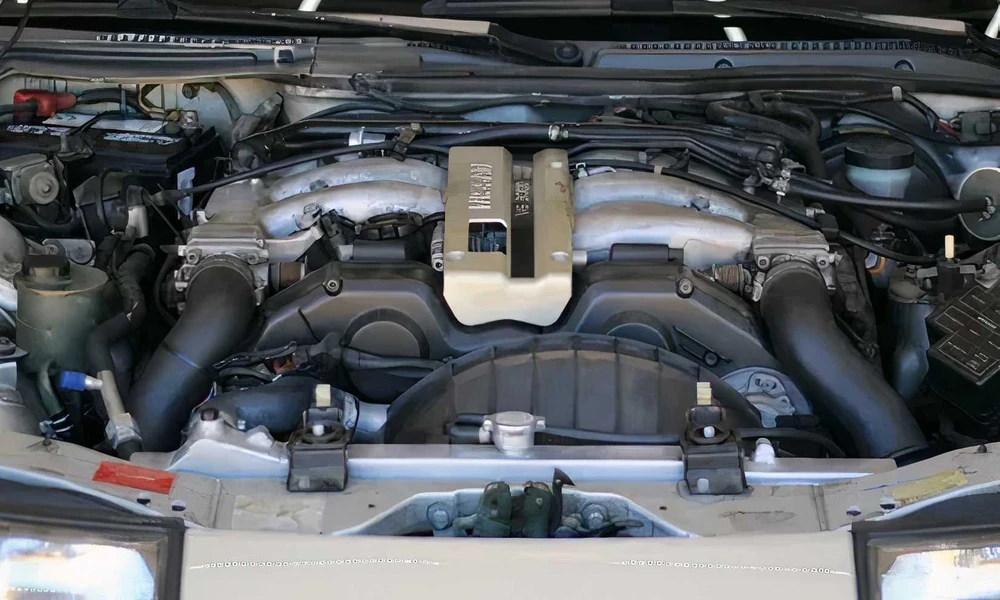
A friend called me at nine on a Tuesday, standing in his garage over a dead 350Z, asking a question that sounded simple and was not. “What engine do I actually want?” He had spent three hours in forum threads and come away more confused than when he started, drowning in codes and opinions and rivalries. Nissan’s engine catalog does that to people. It is deep, it spans economy commuters to motorsport legends, and the community around it holds strong opinions about all of it. By the time we hung up, he had a plan. Here is roughly the conversation we had.
Start with what the car is for
The first thing I told him was to stop reading spec sheets and answer one question: what is this car supposed to be when it is finished? A reliable daily driver, a weekend toy, or a build chasing power? Nissan made an engine that fits each answer, and picking the goal first collapses an overwhelming catalog into a short list. His 350Z wanted its heart back, which pointed straight at one family. A different goal would have pointed somewhere else entirely.
This is the step most people skip, and it is why they drown. The engine is not the starting point. The purpose is.
The families that define the lineup
Once you know the goal, the options organize themselves.
The SR20 is the beloved four-cylinder, especially the turbocharged version that powered Silvias and became a swap icon. For a lightweight rear-drive build, it is often the first engine mentioned, and for good reason. It is compact, tunable, and carries a huge aftermarket.
The VQ35 is the V6 that lived under the hood of the 350Z, the Maxima, and a long list of others. Strong, smooth, and produced in enormous numbers, it is the natural choice for restoring a car that came with it, which is exactly where my friend landed. Anyone browsing a Nissan JDM engine selection for a 350Z or a G35 will find the VQ is almost always the answer, and the sheer production volume means clean used examples are not hard to come by.
The RB series is the legend, the inline-six most associated with the Skyline. It carries a mystique and a price to match, and it is the engine people build dreams around rather than daily commutes. Beautiful, storied, and not the pragmatic pick for most projects.
Below all of them sit the sensible commuter engines that kept Altimas and Sentras running for hundreds of thousands of miles, the ones nobody romanticizes and everybody relies on.
Where to actually look
With the goal set and the family chosen, my friend needed to see real inventory rather than forum folklore. I pointed him toward browsing an actual catalog of Nissan engines so he could compare the specific VQ options, their documented mileage, and their prices side by side instead of arguing with strangers about hypotheticals. Seeing three real units for his car, with mileage estimates and warranty terms attached, did more to settle his decision than any thread had.
It is a pattern I have watched play out over and over. People spend hours debating which engine is theoretically best and almost no time looking at what is actually for sale in good condition at a price they can afford. The theoretical best engine that does not exist in your budget is worse than the very good engine sitting on a pallet with a warranty. Real inventory has a way of ending arguments that spec sheets only prolong.
That is the moment the project turns from abstract to concrete. Codes on a screen become a part on a pallet with a price and a warranty, and the decision gets a lot easier.
Tuning out the rivalry noise
A word about the forum culture, because it nearly derailed my friend before he started. Every engine family has a faction, and the factions argue. SR20 loyalists dismiss the VQ as too heavy, VQ people call the SR dated, and the RB devotees look down on everyone from atop a pile of unobtainium. Read enough of it and you come away convinced that whatever you were leaning toward is secretly the wrong choice. It is exhausting, and most of it is noise.
The trick is to remember that these arguments are almost always about an idealized build, not your actual car and budget. A debate about which engine makes the most power at the drag strip is irrelevant to someone restoring a daily driver. Filter every strong opinion through one question: is this person solving my problem, or arguing about theirs? Once my friend started doing that, the threads got quiet fast, because very few of them were actually about putting a reliable V6 back into a specific 350Z on a real budget.
Communities are still worth their weight for the practical stuff, the wiring notes, the mounting quirks, the known compatibility traps. That knowledge is gold. The tribalism about which engine is spiritually superior is not. Take the fitment documentation and leave the rivalry, and Nissan’s passionate community becomes an asset rather than a source of paralysis.
The fitment talk nobody enjoys but everyone needs
Then came the less romantic part. A Nissan engine that fits the dream does not automatically fit the car. The SR20 swap into something that never had one is a project with wiring, mounting, and management work attached. Even a like-for-like VQ replacement needs the code matched precisely, because the family spans years and variants that differ in ways that matter. I made him promise to confirm the exact designation his 350Z wanted before he clicked buy, and to read the model-specific forum on which VQ variants drop in cleanly.
Nissan owners have documented this as thoroughly as Honda, Toyota, and Subaru people have documented theirs. The knowledge exists. It just has to be consulted before the money moves, not after.
How the call ended
By the end my friend had a one-line plan: source a documented, low-mileage VQ35 matched to his car’s exact code, from a seller who stood behind it, and inspect it the day it arrived. No mystique, no rivalry, no three-hour forum spiral. Just a purpose, a family, a real listing, and a verified fit. That is the whole method, and it works for any Nissan build. Decide what the car is for, let that choose the engine family, look at real inventory rather than legend, and confirm the fitment before you commit. Do that and Nissan’s intimidating catalog becomes exactly what it should be: a deep menu of good options, one of which is clearly yours.
