

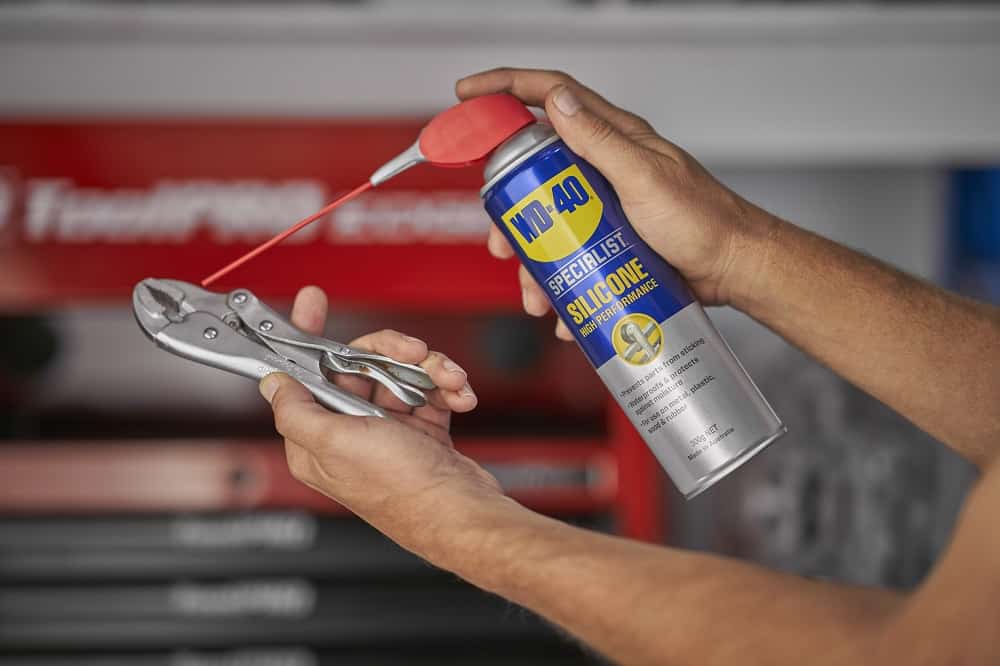
Silicone spray is a multipurpose lubricant that comes with waterproofing and corrosion-blocking properties. Its wide range of applications includes various surfaces like metals, hardwood, leather, and plastic. It is very effective in use in automobiles as well as other sectors like industrial, household, DIY, and gymnasiums. These lubricants come with a quick-drying formula that leaves a clear, odorless, nontoxic silicone coating with long-lasting lubrication. Its moisture-locking formula stops rubber cracking and drying and protects surfaces that often get damaged by grease or oil.
Features of Silicone Spray
Spraying silicone on rusted or overly rigid things facilitates free movement by minimizing surface friction. Except for a few advantages, it is similar to oil. It is non-reactive to most substances. It can retain its greasiness in high temperatures without getting oxidized.
Lubricating hard-to-reach areas, such as the moving parts of machinery, including the bearings, is effortless with the spraying formula. With its water-resistant capacity, it can withstand extreme weather conditions, such as extreme cold and heat, without compromising the lubricant’s performance. Its water-repellent property wards off the moisture that protects rust-prone equipment.
Due to its highly concentrated formula, silicone spray can endure temperatures between -50°C and +260 °C. The spray leaves a transparent, stain-proof, and non-sticky coating that prevents dirt from adhering.
Automobile Applications
With its numerous benefits, car owners must have a silicone lubricant spray in their DIY tool arsenal:
- Deck-Lid, Door, Hood, and Lift-Gate Latches and Hinges:
Car owners can now maintain and enjoy the smooth operation of their vehicle’s hinges and locks by spraying silicone lubricant occasionally. Car owners no longer have to struggle with a rugged latch in the freezing weather. The spray also stops rust buildup on the deck lid, door, hood, and lift-gate latches and hinges.
- Door lock cylinders
No matter how often a keyless entry device fails, spraying the lock cylinders with silicone will ensure that they continue to function flawlessly.
- Seatbelts
If seat belt retraction takes forever, spraying silicone is the easy solution. Owners just need to fully extend the belt, lightly spray it with silicone, and allow it to retract.
- Manually Operated Windows
Be it manual or one-finger operation; the window function will be quicker and more effortless by silicone sprayed into the channel where it glides up and down.
- Lubricating the chassis
Metal-to-metal surfaces can damage bushings and bearing surfaces due to a lack of lubrication. This often leads to wearing down and even failure of steering and suspension joints. To address this issue, car owners must lubricate their chassis by spraying silicone.
- Door weather stripping
One can spray silicone on the weather stripping to prevent ice from fusing the rubber to the metal doors. Doors will open and close more smoothly as a result, and it will also help keep the weather stripping from tearing.
- Window Tracks for Cars
If a car has issues with powering the window track and has a slow operation or zero movements, spraying silicone can resolve the matter. One must apply the solution to the window seals, track, and straw tip to fix the issue.
Conclusion
Silicone spray is a highly versatile product with many home and vehicle uses. The spray is ideal for rust-prone areas and works wonders as a mold-growth protector. It is highly chosen for general lubrication since it does not react, damage, or leave stains on the treated surfaces.
