

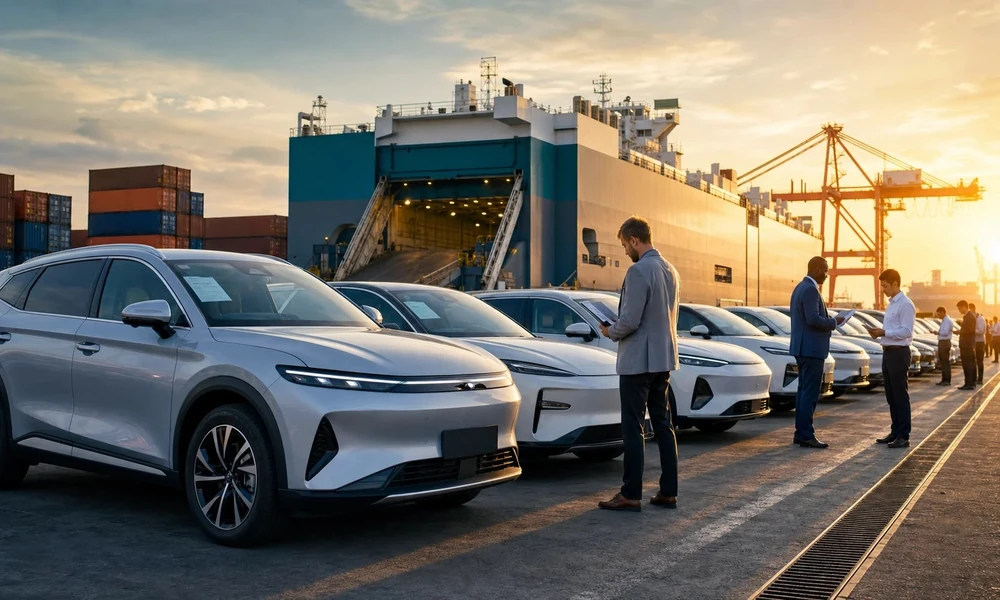
Pre-owned Chinese EVs are moving from a side opportunity to a serious inventory category for dealers who know how to screen them. The attraction is not just a lower purchase price. It is the chance to offer modern cabins, quiet city driving, and lower daily energy costs to buyers who may not be ready to pay for a brand-new EV.
The Stock Question
The smarter way to look at this category is as a stock-selection exercise. A dealer is not buying “used EVs” in general. They are choosing specific units that can be explained, charged, inspected, and supported in the destination market. That difference matters. A cheap car with unclear battery condition can become expensive after it lands. A well-documented used EV, even at a slightly higher sourcing cost, can be easier to sell with confidence.
For wider inventory planning, Starvia’s Chinese EV market guides give dealers a broader place to compare used EVs with new EV, hybrid, and fleet sourcing themes.
A useful buying memo should start with three filters. First, battery condition: state-of-health information, mileage, warning lights, visible condition, and charging behavior should be reviewed where available. Second, charging compatibility: the port, charging protocol, adapter plan, and customer handover process should match the local market. Third, resale story: the vehicle should have a buyer profile, not just an attractive auction photo.
Dealers also need to avoid the common depreciation trap. A used Chinese EV may look like a bargain because new-model cycles in China move quickly. But overseas buyers are not only comparing model-year freshness. They compare equipment, cabin feel, energy cost, and trust. If the car still feels modern and the dealer can show inspection discipline, the lower entry price becomes a value story rather than a discount story.
Where Used EV Deals Go Wrong
The strongest candidates are usually vehicles with predictable use cases. Urban commuters, second-car households, delivery drivers with short routes, and ride-hailing operators with dependable charging can all be good matches. Vehicles with unclear software, rare parts, unusual charging setups, or hard-to-explain trim differences should be treated more carefully, even if the initial price looks tempting.
Presentation is part of the product. A dealer should prepare condition notes, charging guidance, battery comments, realistic range language, and a simple handover checklist. That package helps the sales team talk about verified value instead of asking the buyer to trust vague claims.
There is also a finance angle. Used EVs can reduce the customer’s entry point, but importers should still account for inspection cost, inland transport, battery documentation, spare charging accessories, and any reconditioning needed before retail. A vehicle that looks cheap in China can lose its advantage if the dealer has to solve every issue after arrival. This is why pre-shipment review, photos, documents, and supplier communication matter as much as the price itself.
Dealers should also be selective about model familiarity. A recognizable brand or model family can make the conversation easier, but only if the local market can support parts and service. Unknown units may still sell, yet they need a clearer explanation of battery, charging, software, and after-sales support.
The first retail unit should also teach the dealer something. Which questions do buyers ask most often? Do they worry more about battery life, charging access, resale, or spare parts? Those objections should shape the next purchase order. A dealer that learns from the first small cycle can improve stock quality before committing more capital.
For dealers building this category, the priority is not to buy the cheapest possible stock. It is to buy used EVs that can become credible showroom inventory. For further reading on used Chinese EV sourcing, Starvia’s related article explains why this segment is gaining attention among overseas dealers.
