

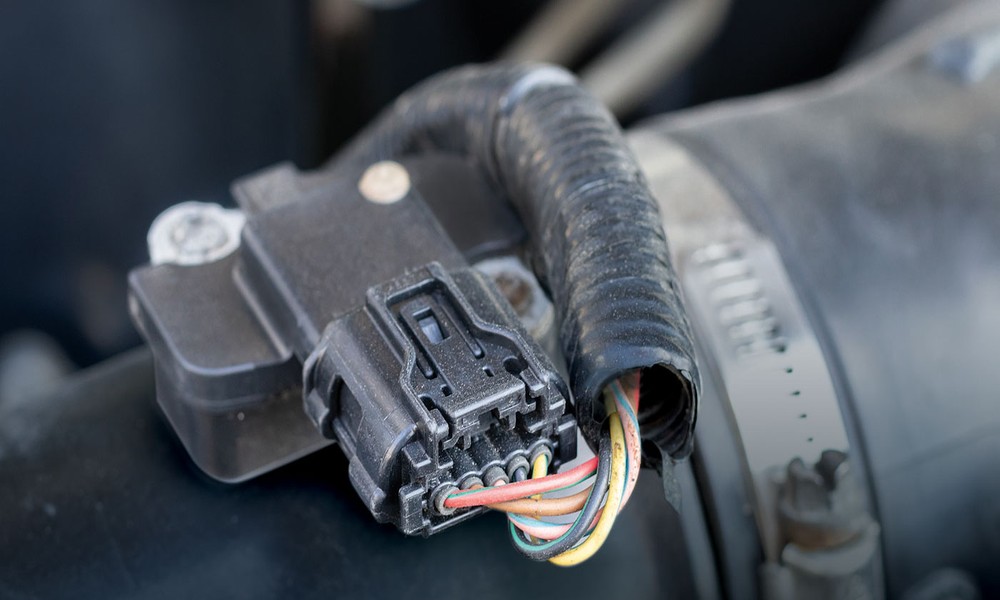
Modern engines depend on continuous coordination between air intake measurement and fuel delivery. Every moment the engine is running, it is adjusting how much air enters, how much fuel is injected, and how both interact inside the combustion process.
Nothing operates in isolation anymore. A small change in airflow measurement immediately affects fuel delivery, and that chain reaction defines how smoothly the engine behaves.
Air measurement defines engine behaviour
Airflow sensors are responsible for calculating the amount of air entering the engine at any given time. That information is essential because it determines how the engine prepares fuel delivery.
When readings are stable, engine operation feels consistent. Acceleration remains predictable, idle stays steady, and fuel consumption remains within expected limits.
Even small deviations in airflow measurement can influence engine balance, because the system continuously adjusts based on live data rather than fixed settings.
Fuel delivery adjusts in real time
Fuel systems operate based on airflow data, controlling how much fuel is injected into the combustion chamber at precise intervals.
This adjustment happens constantly while driving, not in steps or delays, but in continuous response to engine conditions.
In this process, Fuel Injectors play a critical role by delivering fuel in controlled bursts that match the exact requirements calculated by the engine system at that moment.
Because this process is tightly regulated, even slight variations in timing or fuel quantity can influence how the engine feels during acceleration or idle.
Constant correction inside the system
Modern engines do not operate on fixed patterns. Instead, they constantly correct themselves based on feedback from sensors and fuel delivery performance.
Air intake is measured, fuel is adjusted, combustion occurs, and the system recalculates instantly for the next cycle. This loop continues hundreds of times per second while the vehicle is running.
That level of correction improves efficiency and emissions control, but it also means small irregularities become noticeable much earlier than they would in older systems.
Small variations affect driving feel
Because everything is connected in real time, even minor inconsistencies in airflow or fuel delivery can influence how the vehicle responds.
This may appear as slight hesitation during acceleration, uneven idle behaviour, or small changes in throttle response under load.
These effects do not always indicate a major fault. They often reflect the system adjusting to maintain balance under changing conditions.
Precision defines modern engine behaviour
Older engines could operate within wider tolerances, where minor variations did not significantly affect performance.
Modern engines operate differently. Every component works within narrow parameters, which improves efficiency and consistency but reduces flexibility.
As a result, systems like airflow sensors and Fuel Injectors operate with far greater precision, and any deviation from expected behaviour is corrected immediately by the engine control system.
This is why modern vehicles feel more controlled, but also more responsive to even the smallest changes inside the system.
